

What do you do now?
Do you trust him with your very life—though he cannot prove that the “disease” he diagnoses you with even exists?
Or do you take full control of your own well-being, health and future by doing due diligence and researching the drug—demanding to know if it is addictive, causes suicidal or homicidal ideation, or might leave you in even worse shape than before?
Do you insist on full written informed consent before you pop those pills and take a chance on the psychiatric roulette wheel of life and death?
Well, you most certainly should.
“Our veterans deserve nothing less than complete transparency when it comes to their health.”
In fact, a new piece of legislation called the Written Informed Consent Act is slowly making its way through Congress, and would require Department of Veterans Affairs doctors to “provide veterans with clear, written information about the potential side effects of antipsychotics, stimulants, antidepressants, anxiolytics and narcotics prescribed through the VA healthcare system.”
The bill would order that a standardized written consent form be provided to veterans.
“Our veterans deserve nothing less than complete transparency when it comes to their health and the medications they’re prescribed,” said Congressman Gus Bilirakis. “The Written Informed Consent Act will empower veterans to make better-informed decisions about their treatment and protect their right to understand the risks involved.”
According to bill sponsor Congressman Jack Bergman, the act “ensures that before powerful medications are prescribed, veterans receive clear, written information about the potential side effects. Veterans deserve full transparency when it comes to their care.”
It makes sense, right? If you’re prescribed a drug, you should be fully informed of what it is likely to do “for” and to you, right?
In other words, you should know what you’re getting into. You should be the one to make the decision, with your eyes wide open.
Virtually every veterans group—groups like the American Legion, Veterans of Foreign Wars, Iraq and Afghanistan Veterans of America, Disabled American Veterans, Jewish War Veterans, Reserve Officers Association, Association of the United States Navy, Special Operations Association of America, Military-Veterans Advocacy, Fleet Reserve Association, Navy SEAL Foundation, Air Force Sergeants Association, Grunt Style, American Veterans, Military Order of the Purple Heart, Tragedy Assistance Program for Survivors and Vietnam Veterans of America—agrees that the legislation should become law.
That’s because, even though Department of Veterans Affairs psychiatrists and medical doctors are supposed to provide full information on every drug they prescribe, they often don’t.
“I do believe there should be informed consent,” Marine Corps SIGINT Association President James Hobby told Freedom Magazine. “There are so many instances where informed consent was never given. Veterans are often not told the side effects of these drugs.
“I think veterans should be fully informed every single step of the way, like this new legislation mandates.”
Derek Blumke, former veterans editor for Mad in America, an online publication that exposes the dangers of psychiatric drugging, cited “continued inaction by the FDA, DEA, HHS and the Department of Veterans Affairs to inform veterans, their families—and all Americans—of the dangerous risk profiles of the drugs they’re prescribed.”
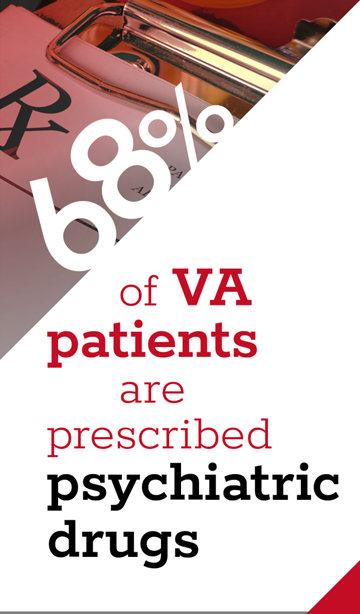
Some 28 percent of VA patients are prescribed antidepressants and 68 percent are prescribed psychiatric drugs, according to Blumke.
Informed consent would give them a chance to refuse to take powerful, dangerous drugs.
Psychiatrists want to retain sole control of what veterans put in their bodies—and what they understand about it.
Starting in 2004, the FDA mandated “black box” warnings on antidepressants indicating that they can cause suicidal ideation.
“Veterans regularly tell of how they were not informed of the risks of psychiatric drugs, including that antidepressants may induce suicidal impulses,” Mad in America wrote. In 2024 and 2025, the VA’s Office of Inspector General highlighted a lack of evidence that prescribers had properly discussed the risk of psychiatric drugs for patients at VA hospitals.
There were 3,879 suicides by veterans ages 18 to 34 between 2006 and 2022.
While there is little reliable data on how many veterans commit suicide while taking VA-prescribed antidepressants, Mad in America states there is “reason to conclude that the rise in suicide is being driven, at least in part, by the VA’s suicide prevention efforts. Its screening protocols have ushered an ever greater number of veterans into psychiatric care, where treatment with antidepressants and other psychiatric drugs is regularly prescribed. Suicide rates have increased in lockstep with the increased exposure among veterans to such medications. As to how many veterans were on antidepressants when they committed suicide, nobody knows,” Hobby told Freedom.
So, given the widespread support for this legislation, why is it not already law? Obviously, there must be some opposition to the legislation, but what crazy people would oppose something so obviously needed and common sense?
None other than psychiatrists, of course.
In a shocking letter to the chairs of the House and Senate Committees on Veterans’ Affairs, the American Psychiatric Association voiced strong opposition to the legislation.
“As currently written, [the bill] risks creating unintended barriers to timely treatment and duplicating existing processes. The VA’s current informed consent policy … already requires written consent for treatments and procedures involving significant or unusual risks, including certain psychiatric and pain management medications.
“By requiring a new, separate written consent process for virtually all psychotropic drugs … the legislation would add unnecessary administrative steps that delay care.”
So they oppose this bill on the grounds that it might make them fill out extra paperwork? My, how inconvenient—as if that is more important than informing their patients that the drug being prescribed might get them hooked or cause them to kill themselves.
That means psychiatrists want to retain sole control of what veterans put in their bodies—and what they understand about it. They don’t want Congress telling them what to do, or forcing them to give veterans a clear and informed choice about whether to accept the substances that VA mental witch doctors want to give them.
Veterans are some of our most honored and valued citizens. They deserve the right to know everything there is to know about any treatments they receive.
Our heroes keep us safe.
It’s time we did everything in our power to do the same for them.