

Terrorist groups like Hamas, the Taliban and ISIS have long financed their operations through criminal enterprises, including the drug trade, a pattern increasingly mirrored by powerful cartels. These deploy terrorism to protect their operations, targeting governments, officials and anyone who threatens profits. Colombian drug lord Pablo Escobar exemplified the model, orchestrating assassinations and bombings in a war against the state.
On February 26, alleged Sinaloa Cartel leader René Arzate-García and his brother, Alfonso Arzate-García, were indicted in San Diego on charges of drug trafficking and narcoterrorism. The brothers remain at large, each carrying a $5 million bounty for information leading to their capture.
“These are not victimless crimes. Illegal drugs destroy families, fracture neighborhoods, erode trust and foster corruption.”
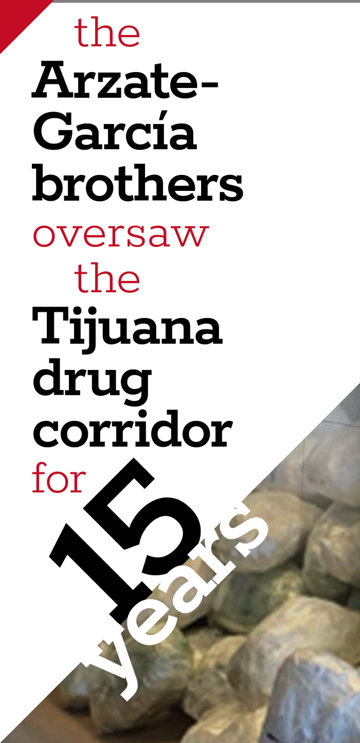
Prosecutors allege the brothers controlled the Tijuana drug corridor for more than 15 years, using murder, kidnappings, extortion and corruption to move “thousands of kilograms of methamphetamine, cocaine, fentanyl and marijuana into the United States.”
To put that amount—“thousands of kilograms”—in perspective, just two milligrams of fentanyl, equivalent to ten grains of table salt, is a lethal dose.
The charges—narcoterrorism, providing material support to a foreign terrorist organization and related offenses—stem from the US government’s 2025 designation of certain cartels, including Sinaloa, as foreign terrorist groups. The shift enables prosecutors to pursue cartel activity as both drug trafficking and terrorism and to target cartel networks as national security threats rather than ordinary criminal organizations—thereby unlocking broader legal powers and harsher penalties. In the past, powerful traffickers sometimes secured reduced sentences through plea deals or by turning state’s evidence. Narcoterrorism charges narrow those escape routes, making it far more difficult for cartel leaders to avoid accountability for large-scale violence.
US Attorney for the Southern District of California Adam Gordon said, “These charges reflect the devastating harm inflicted on communities on both sides of the border through violence, addiction and intimidation.”
Court documents describe René Arzate-García, also known as “La Rana,” as “a high-ranking, hyper-violent Sinaloa Cartel lieutenant” who prosecutors say orchestrated violence to secure and expand the cartel’s trafficking empire alongside his brother, Alfonso Arzate-García, also known as “Aquiles.”
“These are not victimless crimes. Illegal drugs destroy families, fracture neighborhoods, erode trust and foster corruption,” said Drug Enforcement Administration Special Agent in Charge James Nunnallee of San Diego.
Just a few of the millions of tragedies wrought by the likes of the Sinaloa Cartel:
- Zach Didier, age 17, bought what he thought was a pain reliever on Snapchat. His parents found him dead in their own home from a fentanyl overdose.
- Olivia Patla was a day away from graduating high school when she took the fentanyl pill that killed her. Her mother had warned her to be careful before leaving the house that night, and she had replied: “Mom, I’m not stupid. I would never do that. I don’t want to die.”
- A 1-year-old girl was found dead in her bed. She had swallowed a fentanyl patch she found on the floor.
If convicted, the newly indicted Arzate-García brothers could face life in prison.
As transnational cartels are increasingly prosecuted as terrorist organizations, the legal and personal stakes for those who run the world’s most dangerous narcotics networks rise sharply.
For some, the gamble may not be worth it. For the rest, it could mark the beginning of the end.